
Rolling Slots
Welcome Pack 300% up to C$5,800 + 750 Free Spins
Interac is a familiar way for many Canadians to fund an online casino account, but the cashier experience is not identical everywhere. We look at how each site handles deposits, withdrawals, limits, fees and payment approval so you can see the full route from bank account to casino and back again.
For most players, the appeal of Interac is simple: the payment begins in the casino cashier and is completed through familiar online banking. The exact route can still vary. One site may use a standard e-Transfer flow, another may send a Request Money request, and a third may rely on a payment provider.
We always look at deposits and withdrawals separately. A working Interac deposit tells you how the account can be funded; it does not tell you how winnings will be paid out.
| Part of the payment | What we look for |
|---|---|
| Deposit | The Interac route, CAD support and the amount allowed |
| Withdrawal | The payout methods actually shown in the cashier |
| Processing | The operator’s approval time before the transfer is sent |
| Limits | Casino limits alongside the player’s bank limits |
| Fees | Any charge shown by the bank, casino or provider |
| Bonus | Whether the chosen payment method qualifies for the promotion |





Welcome Pack 300% up to C$5,800 + 750 Free Spins

First Deposit Bonus 100% up to $375



150% up to $1000 + 270 free spins

Welcome bonus 425% up to 3000CAD + 675FS

Welcome Bonus Pack 400% bonus up to €2200 + 350 FS

Welcome bonus up to 1250 CAD + 330 CAD freebets

Welcome Casino Bonus 150% up to C$1,150


Welcome Casino Bonus 150% up to €1500 & 150 FS

$5000 + 300 FREE SPINS
Casinos do not all present Interac in the same way. Sometimes the payment opens as an e-Transfer. Sometimes you receive a Request Money request to approve in online banking. A payment provider can also sit between the casino and the bank.
| Route | What you are likely to see |
|---|---|
| e-Transfer | A bank-transfer flow started from the cashier or payment page |
| Request Money | A request that you review and approve through online banking |
| Provider-handled e-Transfer | The provider supplies the transfer instructions and reference |
| Interac Debit | A debit-card based option where supported; it is separate from e-Transfer |
Look at the amount allowed for the exact payment route and, if you plan to claim a bonus, read the payment exclusions first. It is also worth opening the withdrawal cashier before you fund the account. That one step tells you whether Interac is available in both directions or whether you will need another method when you cash out.
Keep the banking confirmation and casino transaction reference until the deposit appears in your balance.
Casino payout times make more sense when you separate the operator’s work from the payment itself. The transfer cannot begin until the casino has approved the withdrawal.
| Stage | What happens | Where a delay can occur |
|---|---|---|
| Request submitted | You choose an available payout method and amount | The method may be unavailable or the amount may fall outside the limits |
| Operator review | The casino checks and approves the cashout | Pending queues or manual review |
| Verification | Identity or payment details may be checked when required | Missing or mismatched information |
| Payment sent | The approved amount is released through the chosen route | Provider processing |
| Bank receives it | The transfer reaches the registered account or Autodeposit | Bank-side checks or incorrect contact details |
Some casinos accept Interac for funding but do not offer it for cashouts. In that case, the withdrawal screen may show a bank transfer, another bank-payment service, an e-wallet or another method allowed for your account. The live cashier is the best place to see what is available before you deposit.
There is rarely one number that can be called “the Interac limit.” A bank limit, a casino deposit limit and a withdrawal cap can all apply to the same account.
| Limit | Who sets it | How it affects you |
|---|---|---|
| Bank e-Transfer limit | Bank or credit union | Restricts how much can be sent or received within a given period |
| Casino deposit limit | Casino or payment route | May be lower than the amount your bank allows |
| Withdrawal limit | Casino | Can force a large cashout to be split into several payments |
| Bonus minimum | Promotion terms | May be higher than the cashier’s normal minimum deposit |
For a larger withdrawal, the payout cap and operator processing policy matter more than the size of the first deposit. If the balance is above a single-payment limit, ask how the casino divides the payment and whether each part goes through a separate review.
The quickest way to fund an account is not always the easiest way to withdraw from it. We prefer to look at the complete route: how the money goes in, how winnings come back, what the limits are and whether another service is needed in between.
| Method | Good fit when | Point to watch |
|---|---|---|
| Interac e-Transfer | You want to use Canadian online banking | The same route may not be offered for withdrawals |
| Request Money | You are comfortable approving a request in online banking | Deposit support does not say anything about the cashout method |
| iDebit / Instadebit | You prefer a bank-connected payment service | Supported banks, account requirements, fees and withdrawal support |
| Bank transfer | You want a direct bank payout route | Processing time, minimum cashout and possible fees |
| E-wallet | You prefer a separate wallet between the casino and bank | Bonus exclusions and whether the wallet accepts payouts |
| Card | You prefer familiar card funding where available | Withdrawals may need a different route |
| Crypto | The casino supports it and you understand network and price risk | Correct asset/network, fees and withdrawal rules |
Before registering, it is enough to answer a few practical questions: can you deposit in CAD, can you withdraw through a method you are comfortable with, what is the cashout minimum, and how long does the casino hold a withdrawal before sending it?
Interac can appear under several names in a casino cashier. The most familiar is e-Transfer, but some sites use Request Money or route the payment through a third-party provider. Interac Debit is a separate card-based product, so seeing that label does not mean e-Transfer is available as well.
The important distinction is between putting money in and taking money out. A casino may accept an Interac deposit and use a different method for withdrawals. That is why we treat the deposit screen and the withdrawal screen as two separate checks.
For a deposit, the process usually starts in the cashier and continues in your bank’s app or online banking. The amount, recipient or payment provider should match what the casino shows on screen. Once the transfer is complete, keep the reference until the balance appears in your casino account.
The banking part can be quick, but it starts only after the casino releases the money. A pending withdrawal, document check or bonus review belongs to the operator’s process, not to Interac itself.
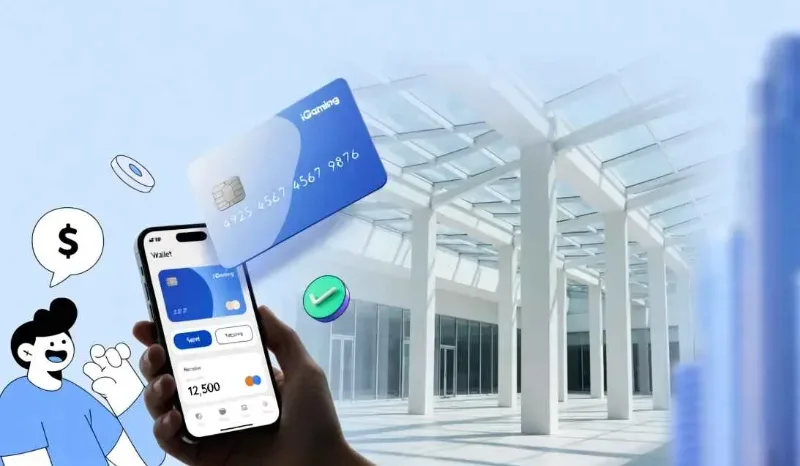
There is no universal Interac limit for casino payments. Your bank or credit union may set one transfer limit, while the casino applies its own minimums and maximums. The lower of the two is the limit that matters in practice.
| Part of the payment | Where the rule comes from | What can change |
|---|---|---|
| e-Transfer amount | Your bank or credit union | Per-transfer, daily or rolling limits |
| Casino deposit | The cashier | Minimum and maximum deposit |
| Casino withdrawal | The operator | Minimum cashout, payout cap and frequency |
| Bank charge | Your account package | Whether e-Transfers are included or charged separately |
| Casino or provider charge | The operator or payment provider | Any fee shown before you confirm the payment |
| Payout time | Casino first, payment route second | Approval time plus delivery after release |
It is worth looking at the final confirmation screen rather than relying on a general payment-method page. That is where the amount, fee and current route are most likely to be accurate for your account.
Interac deposits often work with casino promotions, but the rule belongs to the bonus rather than the payment method. Some offers accept the deposit normally but exclude it from bonus qualification.
Before opting in, check the qualifying deposit, wagering requirement, game restrictions, maximum stake and expiry date. The headline percentage matters less than whether the offer fits the way you actually plan to deposit and withdraw.
A fast e-Transfer does not automatically mean a fast casino withdrawal. The total wait starts when you submit the cashout request and ends when the money reaches your bank account.
| Stage | Where delays usually happen |
|---|---|
| Casino review | Pending queues, manual approval or weekend handling |
| Verification | Identity, payment ownership or other requested checks |
| Withdrawal rules | Minimums, payout caps or a method that is unavailable for your account |
| Payment delivery | The transfer after the operator has released the funds |
| Bank receipt | Bank-side security checks or a problem with the registered contact details |
When a site advertises an “instant” payout, read what the timing actually refers to. In some cases it describes only the transfer after approval, not the operator’s full cashout process.
A low deposit threshold can look attractive, but it tells you very little about withdrawals. The cashier may have one general minimum, the Interac route another, and the bonus a third qualifying amount. The minimum cashout is a separate figure again.
If you are starting with a small deposit, look at the withdrawal threshold and any fees before you fund the account. A C$10 or C$20 deposit is less useful if the payout rules make a small balance difficult to withdraw.
Interac e-Transfer is available through many Canadian banks and credit unions, including RBC, TD, BMO, CIBC, Scotiabank, National Bank, Desjardins and Tangerine. Support for e-Transfer does not mean that every casino payment will go through automatically.
Your financial institution can still apply transaction limits, security checks and account rules. The casino may also restrict the amount or the payment route available to a particular account.
If Autodeposit is set up for the email address or mobile number used to receive an e-Transfer, an incoming payment can be deposited without answering a security question. That can make the final receiving step simpler.
It does not shorten the casino’s own review. Verification, payment checks and manual approval still happen before the operator sends the transfer.
Interac is a payment method, not proof that a casino is authorized where you live. Provincial rules, operator status and complaint routes need to be checked separately.
Ontario has a regulated private iGaming market. Players should confirm an operator through the current iGaming Ontario directory before treating it as Ontario-regulated. Regulated online play in Ontario is 19+ and requires the player to be physically located in the province.
Alberta’s regulated private iGaming market launched on July 13, 2026. Canadian access or an Interac option on its own does not show that a site is approved for Alberta, so the operator’s status still needs to be checked.
Players in Quebec and British Columbia should use the rules and operator information that apply in their own province. The payment option shown in the cashier and the legal status of the operator are separate issues.
Interac is only one bank-based option available to Canadian players. iDebit, Instadebit, provider-handled e-Transfers, bank transfers, e-wallets, cards and crypto can all appear in casino cashiers. The important question is not which logo looks most familiar, but whether the method works for the full payment cycle.
| Method | Typical setup | Main point to confirm |
|---|---|---|
| Interac e-Transfer | Canadian online banking | Whether withdrawals are supported as well as deposits |
| Request Money | A payment request approved through online banking | The merchant or provider shown in the request |
| iDebit | Bank-connected payment service | Supported banks, fees and cashout route |
| Instadebit | Bank-connected payment account | Account verification, limits and withdrawals |
| Provider e-Transfer | A third party handles the bank-transfer flow | Provider name, instructions and payout method |
| E-wallet | A separate wallet between casino and bank | Withdrawal support and any bonus exclusion |
| Bank transfer | Direct banking details | Processing time, minimum withdrawal and fees |
Our payment review starts in the cashier rather than with the size of the welcome bonus. We look for the Interac route available for deposits, the actual withdrawal choices, the operator’s processing window, minimums, limits and any fee shown to the player.
We also separate facts that are easy to confuse. An Interac logo does not by itself mean the casino offers Interac withdrawals, pays instantly or is locally regulated. Those are different claims and need different evidence.
Interac uses established Canadian banking channels, but the payment method does not vet the casino for you. Use your bank’s official app or website for authentication and read the details of any payment request before approving it.
| Problem | Where to look first |
|---|---|
| Interac is no longer in the cashier | Account location, currency and the current payment list |
| The bank declines the transfer | Transfer limit, authentication and bank-side rules |
| The deposit has left the bank but is not in the casino balance | Bank status, casino transaction history and the payment reference |
| The withdrawal is still pending | Operator processing time, verification and bonus conditions |
| No payout notification arrived | Withdrawal status, registered email or mobile number and spam folder |
| Autodeposit did not complete | Registered contact details and the bank transaction log |
| The notification looks suspicious | Do not use the link; open your bank or casino account directly |
If you need support, keep the transaction reference and use the casino, payment provider or bank’s official support channel rather than replying to an unexpected message.
Several small e-Transfers can add up quickly, so it helps to set a total gambling budget before the first deposit rather than judging each transfer on its own. Deposit limits, time-outs and self-exclusion tools are useful when you need a firmer boundary.
Payment availability and operator regulation are separate matters. In Ontario, use the current iGaming Ontario directory for regulated operators; elsewhere, use the regulator and complaint route that applies in your province or territory.
It is a casino whose cashier includes an Interac-based payment route, usually e-Transfer, Request Money or a provider-handled version of one of those flows. The deposit and withdrawal screens can differ, so we check them separately.
Sometimes. Some casinos send payouts by e-Transfer or through a related provider, while others use Interac only for deposits. Open the withdrawal cashier before depositing if using the same method both ways matters to you.
There is no single payout time. The casino first reviews and approves the withdrawal; only then does the payment move through the banking route. Verification or a manual review can make the first stage much longer than the transfer itself.
The word “instant” needs context. A fast transfer after approval is not the same as an instant cashout from the moment you press Withdraw. Look at the casino’s pending time as well as the final delivery stage.
It depends on the casino and the payment route. The general cashier minimum, the Interac minimum and the amount needed for a bonus can all be different.
They are often credited quickly, but delays can still happen during bank authentication, provider processing or a casino security check. The transaction status in your bank and casino account is more useful than a generic speed claim.
There is no single fee that applies everywhere. Your bank account package may include e-Transfers or charge for them, and a casino or payment provider can show a separate fee before confirmation.
Interac e-Transfer is available through many Canadian financial institutions, including RBC, TD, BMO, CIBC, Scotiabank, National Bank, Desjardins and Tangerine, as well as numerous credit unions. A bank supporting e-Transfer does not guarantee that every casino transaction will be approved.
It can simplify the final receiving step because the incoming transfer can go straight into the registered bank account. It does not skip the casino’s approval or verification process.
Some Ontario casino cashiers offer Interac-related bank payments. The payment option and the operator’s regulatory status are separate things, so check the live cashier for Interac and the current iGaming Ontario directory for the operator.
No. They are different services. A casino may use a third-party provider to handle a bank payment, so the provider name, instructions, fees, limits and withdrawal route are worth reading before you confirm the transaction.
A pending transaction can have several causes: casino review time, verification, payment-ownership checks, bonus conditions, bank security checks or a transfer limit. Keep the transaction reference so the casino, provider or bank can trace it.
Interac uses established Canadian banking channels, but it does not tell you whether a casino is regulated or trustworthy. Use your bank’s official app or website, read the payment details carefully and never share banking passwords or one-time codes with casino support.
Use the withdrawal cashier to see the alternatives available to your account. Depending on the operator, that may be a bank transfer, another bank-payment service, an e-wallet or another supported method. It is better to know the cashout route before you make the first deposit.
The operator may need to confirm identity, account details or payment ownership before releasing funds. That review happens on the casino side and can delay a withdrawal even when the eventual bank transfer is quick.
If your main concern is getting winnings back to your bank, start with the withdrawal rules. The deposit minimum tells you how little you can put in; the cashout minimum and payout cap tell you how easily you can take money out.

Your guide
Douglas Sinclair
Casino Payments Editor
Douglas Sinclair covers casino payments in Canada, with particular attention to how money moves in and out of an account. His reviews look at the payment route shown in the cashier, the operator’s processing stage, bank-side limits and any conditions that can affect a withdrawal. Because cashier options change, the live payment screen and current terms are always the final reference point.